Hide in The Backrooms: Horror
- 4.1
- Rating
- 50.00M
- Installs
- Free
- Price

 Analysis by App-foxy
Hide in The Backrooms: Horror is the kind of action game I open when I want a quick burst of tension rather than a long, story-heavy adventure. Its central idea is immediately clear: I can either hunt down fugitives or try to survive by hiding and escaping the unsettling back rooms. That simple choice gives each session a useful sense of purpose, while the strange setting does most of the work in making ordinary movement feel risky.
My first impression was that the game understands the appeal of the Backrooms concept. Empty corridors, repetitive spaces, and the feeling that something may be just out of sight create a mood that is easy to recognize without needing a complicated explanation. It is free to play, made by CASUAL AZUR GAMES, and belongs firmly in the action category, although its strongest moments come from suspense and pursuit rather than constant combat.
The game has reached more than 50 million installs and holds an average rating of 4.0 from roughly 32 thousand ratings. Those figures suggest a broad audience, but they do not mean it will suit everyone. I found it most enjoyable when I treated it as a compact chase experience: start a session, read the space, make a quick decision, and accept that a mistake may end the attempt sooner than expected.
You May Also Like

 Blood Strike: 2.5 Anniversary
Blood Strike’s Loadouts Turn Every Drop Into a Tactical Gamble
A close look at Blood Strike’s custom loadouts: how fast access to signature weapons reshapes its battle royale rhythm, rewards preparation, and narrows the gap between fights.

 Pandora - Music & Podcasts
Pandora’s Music Is Easy to Start, but Harder to Recover
Pandora’s strength is its low-effort path from a seed to a station. Its weak spot is how much confidence it asks you to place in connection, setup, and quiet recovery.

 8 Ball Pool
 Is Built on Rivalries, Rematches, and Routine
A close look at the rivalries, rematches, shared routines, and unanswered safety questions that turn a quick pool match into a persistent mobile community.

 Samsung Music
’s Quiet Strength Is Playing What You Already Own
Its reach comes less from spectacle than from dependable access to a personal library. That simplicity is both the app’s strongest retention engine and its ceiling.

 AccuWeather: Weather Radar
AccuWeather Review: A Quick, Clear Forecast for Everyday Decisions
For everyday plans, the best forecast is the one you can understand quickly. AccuWeather makes rain timing, radar, and local conditions easy to act on, with a few trade-offs.

 Hill Climb Racing
Why Hill Climb Racing Still Turns Crashes Into One More Run
A tiny car, a bumpy hill and one more upgrade: Hill Climb Racing keeps resurfacing because its simple chaos makes every near-miss feel personal.
More From Our News Desk



How the first few sessions establish the mood
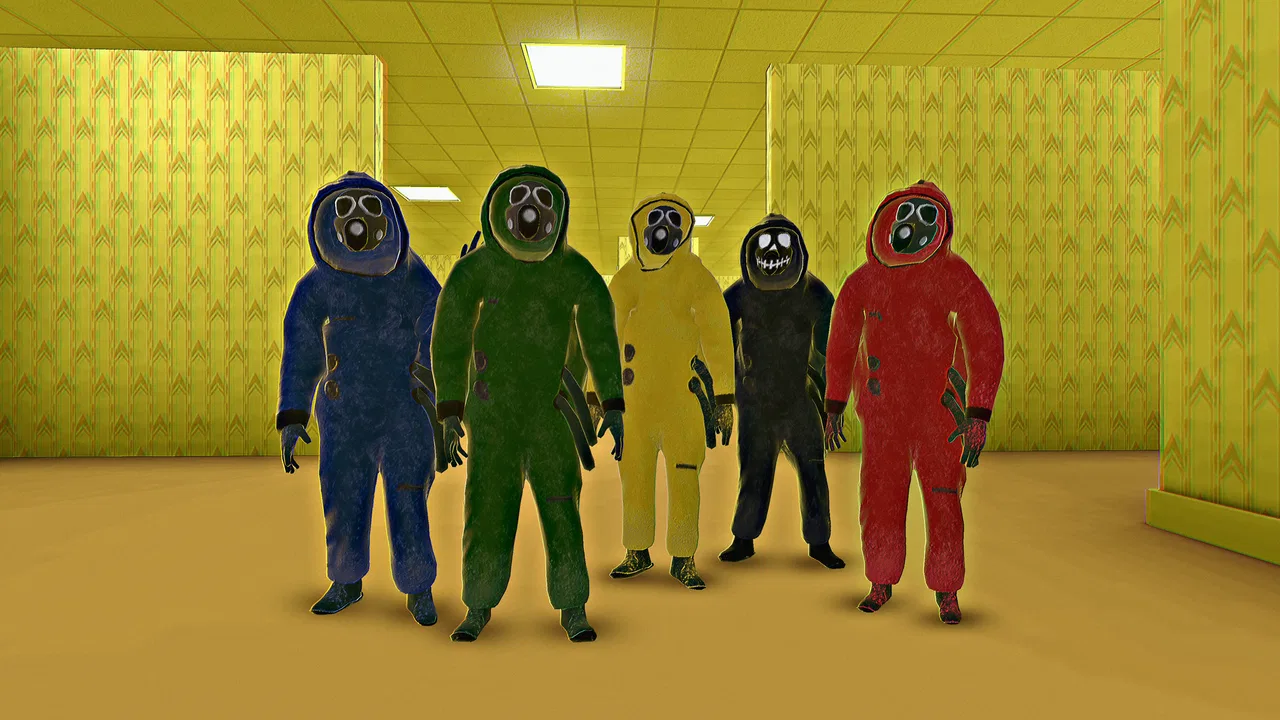
The opening appeal is the contrast between a familiar-looking interior and the threat hidden inside it. Back rooms are not naturally dramatic places. They are plain, repetitive, and often hard to read. That is precisely why the setting works here. Instead of relying on a crowded fantasy world or a battlefield full of visual effects, the game makes blank walls and similar passages feel suspicious.
Choosing whether to hunt or hide also changes the way I look at the same environment. As a hunter, I pay attention to movement, likely escape routes, and places where another player or character might try to disappear. As someone trying to escape, I become more cautious, using the environment as protection and thinking about when movement is safer than waiting. The two perspectives make the premise more interactive than simply walking through a horror map.
The best way to approach it is as a pressure game, not a conventional horror story. I would not install it expecting a detailed campaign with carefully developed characters. Its strength is the immediate situation: I am inside an uncomfortable place, I have a role, and I need to react before the danger catches up with me.
That focus makes it suitable for short play sessions. I can play while waiting for an appointment or take a few rounds during a break without needing to remember a complicated plot. The trade-off is that players who need long-term progression, deep narrative, or a large collection of abilities may find the basic loop less satisfying over time.
A setting built from repetition and uncertainty
The visual direction is important because the Backrooms idea depends on spaces that feel almost ordinary. The game’s environment does not need to be packed with visual detail to be effective. Repeated surfaces and similar corridors make navigation itself part of the tension. When every turn looks familiar, I start questioning whether I am moving toward safety or simply circling back into danger.
This design also changes how I use attention. In a typical action game, I might focus on enemies, weapons, or objectives displayed prominently on screen. Here, the surrounding space deserves equal attention. A corridor that appears harmless may become a poor route if it leaves me with nowhere to turn. A hiding place may be useful for a moment but dangerous if I stay there too long.
That is one of the game’s more interesting trade-offs: the environment creates suspense, but the same repetition can occasionally make progress feel less clear. Players who enjoy learning a space through trial and error will probably appreciate this. Players who prefer obvious objectives and strong visual landmarks may feel disoriented rather than frightened.
I also think the setting works best when I resist rushing immediately. Running everywhere can make the action feel like a simple reaction test. Pausing briefly to understand the shape of a passage, then moving with a reason, gives the atmosphere more room to develop. This is a practical tip rather than a rule: the game becomes more readable when I treat the map as a puzzle of risk instead of a hallway to sprint through.
Why the sound and pacing matter
Sound helps turn the empty setting into a threat. In a place with little visual variety, audio cues can make me feel that something is changing even before I can identify it. The result is a mood built around anticipation. I am not only looking for an enemy; I am listening for signs that my current position may no longer be safe.
The pacing benefits from this restraint. If every moment were filled with attacks, the fear would quickly become routine. The quieter stretches give the chase more impact, because a sudden change in the rhythm feels meaningful. I found that the game’s tension is strongest when movement, silence, and pursuit are allowed to alternate rather than being compressed into nonstop action.
This rhythm also affects how I play with other people nearby. It is easy to treat a free mobile game as background entertainment, but this one rewards a little concentration. Playing in a noisy room can weaken the audio-driven mood and make the experience feel more random. Headphones are not essential to understand the premise, but they make the contrast between quiet exploration and danger more noticeable.
There is a useful pacing lesson here: a failed attempt does not have to feel wasted if I can identify the moment when the rhythm changed. Maybe I moved too soon, waited too long, or chose a route that offered no alternative. Thinking about that moment helps turn repetition into learning instead of simply replaying the same chase.
Where the action mechanics fit the horror
The mechanics are most convincing when they support the feeling of being hunted. The game asks me to make fast choices under pressure, but the setting prevents those choices from feeling perfectly safe. I am constantly balancing visibility, movement, and escape. That is a good match for the Backrooms theme because the environment remains threatening even when nothing is directly attacking me.
The hunter-versus-fugitive structure gives the action a clear shape. Hunting is about reading behavior and closing distance, while hiding is about managing exposure and finding a way out. These are different mental tasks, so switching sides can make the same location feel new. A route that seems useful when escaping may be valuable for cutting someone off when hunting.
One concrete tactic I found useful is to avoid treating the nearest passage as automatically best. The fastest-looking route may also be the easiest place for danger to predict. When I have the option, I prefer a path that leaves a second direction available. That small habit matters because the game’s tension often comes from losing choices rather than from losing health in a traditional action system.
Another useful approach is to separate information gathering from movement. I try to observe the immediate area before committing to a long run. This is especially helpful for players who become disoriented by repeated rooms. A brief pause can reveal whether I am near a useful turn or simply moving deeper into a dead end.
The limitation is that this style of action may feel light compared with larger mobile horror games that emphasize combat, inventory management, or elaborate puzzles. Hide in The Backrooms: Horror is more focused on pursuit and escape. That narrow design helps it start quickly, but it also means the game may not provide enough mechanical variety for someone looking for a full survival-horror package.
What the mobile format gets right and where it adds friction
On a phone, the game’s short-session structure is a natural fit. I do not need to commit to a lengthy chapter before the tension begins. The premise can be understood immediately, and the role-based action gives each attempt a clear direction. That makes it easier to recommend for casual players who want something more atmospheric than a standard reflex game.
At the same time, mobile controls can make tense movement less comfortable than it would be with a controller or keyboard. In a chase, a small directional mistake can feel more frustrating because the consequence is immediate. I found that the game works better when I keep my movements deliberate instead of making constant corrections. Players with limited screen space or a preference for precise control should keep this in mind.
The game is free, but it includes in-app purchases ranging from $2.99 to $99.99 per item. That does not automatically make the experience unsuitable, yet it is worth approaching with a clear boundary. I would play the free portion first and decide whether the core chase loop genuinely holds my attention before spending anything. For a game designed around repeated short sessions, optional purchases can feel less worthwhile if I only return occasionally.
The age rating is Teen, which fits the horror atmosphere and action-oriented premise. I would still avoid presenting it as a gentle game for young children. The tension comes from pursuit, threat, and unsettling surroundings, so the right audience is someone comfortable with mild horror pressure rather than someone looking for a completely relaxed experience.
Who will enjoy it, and who should choose something else
I would recommend this game to players who like the Backrooms aesthetic, asymmetric chase situations, and horror that comes from uncertainty rather than elaborate storytelling. It is also a good choice for someone who wants a free action game that can be understood quickly. The two-sided premise gives the sessions a little variety, and the empty setting creates a distinct identity.
It is particularly suitable for a friend who enjoys discussing tactics after a failed round. Questions such as “Was that route too obvious?” or “Should I have waited before moving?” are more relevant here than discussions about building a powerful character. The game encourages observation and timing, even when it does not explain every decision in detail.
I would skip it if I wanted a substantial solo narrative, complex puzzles, or a combat system with many layers. I would also look elsewhere if repetitive environments make me impatient. A more traditional horror adventure would be better for someone who values story progression and memorable locations, while a competitive action game with clearer arenas may be preferable for someone who wants constant, highly readable combat.
For an everyday scenario, imagine having ten minutes before leaving home. I can start a session, choose a side, and play without preparing a loadout or remembering a campaign objective. If I lose, I can think about one mistake and try again. That makes it more convenient than a story game that needs a longer uninterrupted block of time, but less rewarding if I only want a single polished narrative sequence.
Practical ways to get more from each attempt
My first suggestion is to learn the mood of the space before trying to optimize it. New players often rush because the threat feels urgent, but rushing without a route can remove the options needed later. I try to identify turns, open stretches, and possible fallback directions before committing to a chase.
Second, I recommend changing perspective regularly. Spending all your time on one side can make the other role seem unfair or confusing. Hunting teaches how exposed movement looks from the outside, while hiding teaches which routes feel predictable. Alternating between them improves decision-making because each role reveals weaknesses in the other.
Third, treat repetition as information. If a location looks familiar, that is not only a visual limitation; it is also a reason to remember small differences in position and timing. I pay attention to where I first noticed danger, which turns offered room to react, and whether a route became worse because I entered it too quickly.
Finally, decide in advance how much patience you want to give the game. The atmosphere rewards concentration, but the loop may not expand into a completely different experience after every session. If the first few attempts make you curious about improving your awareness, it is worth continuing. If the repetition already feels like work, purchases are unlikely to solve that basic mismatch.
My atmosphere verdict after settling into the loop
Hide in The Backrooms: Horror succeeds because its art direction, sound, setting, and pacing point in the same direction. The plain spaces make movement uncertain, the audio gives quiet moments weight, and the hunt-or-hide structure turns that uncertainty into a playable decision. None of these elements needs to dominate on its own; together, they create a coherent mood that is easy to recognize.
Its weaknesses come from the same focus. The environment can become repetitive, the action may feel narrow beside deeper horror games, and mobile movement is not always perfectly comfortable during a chase. The free-to-play structure also deserves sensible spending habits, especially for players who are unsure how long the compact loop will hold their interest.
Still, I think the game is worth trying for fans of unsettling empty spaces and quick action sessions. CASUAL AZUR GAMES has built an experience that understands the value of anticipation: sometimes a corridor feels dangerous because I cannot tell what is beyond the next turn. With a 4.0 average across more than 32 thousand ratings, it has clearly found an audience, and its current version, 1.19.0, makes it an accessible starting point for curious players using Android 7.0 or later.
My final recommendation is simple: try it free, play slowly enough to read the environment, and judge it by the quality of its tension rather than by the depth of its story. If you want a compact action-horror game where the setting and pacing do most of the emotional work, it is a worthwhile download. If you need rich progression or a fully developed campaign, I would choose a different horror alternative instead. For me, its strongest achievement is turning an ordinary-looking maze into a place where every decision to move, wait, hunt, or hide feels consequential.
FAQs for Hide in The Backrooms: Horror
01What is the main objective of Hide in The Backrooms: Horror?
In Hide in The Backrooms: Horror, the main objective is to navigate through a series of eerie, labyrinthine rooms while avoiding terrifying entities. The game is designed to test your stealth and problem-solving skills as you explore and uncover the mysteries hidden within the backrooms. Survival and exploration are key.
02Is Hide in The Backrooms: Horror suitable for younger audiences?
Hide in The Backrooms: Horror is primarily aimed at mature audiences due to its intense horror elements and suspenseful gameplay. It contains jump scares, eerie environments, and unsettling themes that may not be appropriate for younger players. Parents should review the game’s content and consider age-appropriateness before allowing children to play.
03Does Hide in The Backrooms: Horror require an internet connection?
While Hide in The Backrooms: Horror can be played offline, certain features such as updates, leaderboards, or multiplayer modes might require an internet connection. To ensure the best gaming experience, it is recommended to have occasional access to the internet for updates and additional content.
04What are the system requirements for Hide in The Backrooms: Horror on Android and iOS?
To run Hide in The Backrooms: Horror smoothly, Android devices should have at least version 5.0 or higher, and iOS devices should run on iOS 11.0 or later. It is also recommended to have a device with at least 2GB of RAM and adequate storage space to accommodate game data for optimal performance.
05How can I enhance my gameplay experience in Hide in The Backrooms: Horror?
To enhance your experience in Hide in The Backrooms: Horror, consider using headphones for immersive sound effects and playing in a dimly lit room to amplify the horror atmosphere. Additionally, familiarize yourself with the controls and explore different strategies to avoid entities and solve puzzles effectively.
Pros
- Immersive horror atmosphere
- Simple and intuitive controls
- Engaging storyline
- Challenging puzzles
- Frequent updates enhance gameplay
Cons
- Repetitive sound effects
- Occasional lag on older devices
- Limited character customization
- Ads can be intrusive
- Requires constant internet connection

Hide in The Backrooms: Horror
Gallery